Showing posts with label deleted scenes. Show all posts

Tidbits: The Three China Doll of Ardennes by Penny Freeman

By Photoplay magazine [Public domain],
via Wikimedia Commons

A deleted scene from My Father's Son

Durant blinked and forced his thoughts back into he room. He did not know how or if he should even attempt to answer that question, but one glance at the lady before him bespoke her utmost need for the information.
He wondered how to begin, then recalled the watch in his pocket. It was not the chronometer he had purchased that morning.
Rather, it was very old and very precious. The workmanship was unsurpassed, but for what it meant to Jeanne, to all the Marchands, to Isabella, and to himself, it was irreplaceable. He had found it in LeDuc’s desk at the study as he cleaned out the drawers.
He knew exactly what it was, and could not help but sense that his father had it put there of a purpose, knowing Durant would know exactly what to do with it.
Durant had brought the watch along with him on that venture, thinking he would return it to Madam Marchand. However, for reasons he little cared to explore, it always remained in his pocket.
The voice inside him which he tried to follow told him that it was as intended, for Jeanne required it just then, and that it was vital that he give it to her.  She had to understand.  She could not go seeking answers from that creature. 

Tidbits: Piper's Fantasy

Deleted Scene from My Father's Son by Penny Freeman


Cassandra offered a smile of encouragement. “Well, perhaps he must be taken to task for it. Perhaps it would do him some good.”
“If anyone could help him, Miss Sterling . . .” He dared speak no more and the lady turned her face away to wrestle with her own warring sensibilities. As she gazed out the window, the setting sun silhouetting her face and igniting the fire in her hair, Durant fell into the fantasy which she opened up to him. It fit hand-in-glove with his daydream of retreating to Trinity and a smithy to carve his own life from the forests and rolling prairies of east Texas.
He thought of a work-weary stonemason making his way home in the twilight. His clothes were plain and common, but they were kept clean and well-mended. His knapsack of tools professed a master’s skill. He would make himself a master mason and stonecutter, avail himself of every opportunity for betterment. He would have only the best for his wife, and so gave the best of himself to accomplish it.
As he walked, his oldest lad and his dog would run up to meet him from where they kept watch and waited. The lad would simply walk silently beside him, or they would consult man-to-man as he reported his day, his own chores done, his morning in school and his afternoon on the moors, his assurance to his father of his use to his mother.
Well-commended, the boy’s bright face would sing in the stonemason’s heart. He would ruffle the thatch atop the lad’s head and assure him of his approval. Very soon indeed, he would take him on as an apprentice and in no time the lad’s work would excel his own. It was a precious bit of time they spent together walking and conferring, and the stonemason savored every moment. He knew that too soon his son would have sons of his own.

Tidbits: Introductions by Penny Freeman

Deleted Scene from My Father's Son:

“Oh, Sandy!  Come see!  Come see!”
Sandy turned from where she buttoned Chloe’s frock, having completed her markings on the new silk gown.  She merely looked at Zoe, surprised to see her serene sister all aflutter, but she infected Chloe immediately.  ”Oh, hurry, Sandy.  I want to see.”
“See what?” Sandy wondered.
“Just come see,” Zoe insisted.  “Come to the stables.”
Dragged by both girls, Sandy hurried down the back stairs and outside, after having slipped on her clogs at the back door.  She laughed and teased the girls with pause and delay, but when they rounded the stables, she stopped short in earnest.  She saw before her Paris sliding off the back of the most marvelous hunter she had ever beheld, lively, high-bred and surely more expensive than her father could ever afford.  Yet, there he stood, with Paris patting his head and holding his bridle, his pleasure outstripped only by the sensibilities his father’s faith engendered.
Nothing more bespoke Mr. Sterling’s pride in his son than that horse.  She did not require sight of him standing hard by with a look of supreme satisfaction on his face to know it.
However, the third gentleman surprised her.  Sandy had never before seen the man in the neighborhood, but at first sight, she felt an air of familiarity about him.  Perhaps the age of Merit— probably the age of Merit—he was taller and broader.  He wore his dark hair so long and unruly it taunted her, and she fought back the urge to go comb it.  Even so, he had an intensity of manner which radiated from him, even as he leisurely stood back, away, fairly in the shadows of the stable, as if he wished to absent himself from the family scene.  And yet, his look of satisfaction exceeded her father’s own, and Paris could not help glancing to him now and again to assure himself the gentleman yet remained. 
Standing there in her garden clogs, in an old frock professing it had seen better days, her work apron so stuck with pins she appeared a porcupine, and her hair hanging long and loose, only drawn back from her face and held with a ribbon, she colored at the very thought of being seen in such a state, especially by that elevated gentleman, and stepped back.

Note to Self: Perfect Is Boring

I have a confession.  I have already mentioned that I actually finished my manuscript for The Famous Mrs. Darcy and was in the editorial process before I gave it up as a lost cause.  The truth is, I didn't give up because my writing was terrible, or even that my plot had grown so complex that I had no idea how to work myself out of it.  My brother/editor maintained that the reader may very well throw up their hands in disgust because it got so confusing, but not even that was enough to murder The Famous Mrs. Darcy.

The killing blow came as I penned the last compelling, heart-rending chapter and I  realized that anyone looking for a sequel to Pride and Prejudice would absolutely HATE this book.  My Mr. Darcy had demons and passions and deep and treacherous crevasses in his soul.  He battled to retain his sense of self.  He had developed evolved to such a degree that he had become unrecognizable.

Plagued with jealousy, torn loyalties and problems without solutions, my Mr. Darcy turned to alcohol.  The greater the stressors of honor and duty, the more intense the conflict between loyalties, the more volatile became his temper.  My Elizabeth threatened to become a cipher in his shadow.  She suffered indignities and made certain choices that would cause Jane Austen to turn over in her grave. My detractors would be screaming "anachronisms" and "social consequences" even louder than myself.

Tidbits: Paris

Here's another deleted scene from "My Father's Son" by Penny Freeman


Paris loved the harvest.  He loved the cool of the morning and the sun of midday.  He loved the smell of fresh mown hay, summer showers and the newly wetted earth.  He loved rich fields of grain, the heavy heads drooping with prosperity, ruffling in the breeze like waves of the sea.  He loved the way the harvesters worked in concert, the lead man taking several wide swaths with his scythe before the next man began, behind and beside him, and then the next, and the next, as the women followed likewise to tie the fallen stalks into sheaves. He loved to watch as the single organism worked its way up the field, leaving bunches of heavy sheaves propped in its wake, but more still, he loved to be a part of it.  They were a great machine, and to be one of those cogs, to have a purpose, to feel himself an asset rather than a liability filled him with strength.
There was something immensely satisfying in advancing row after row, reducing each to stubble and moving on to the next.  He found the rhythmic swish of the scythe through the stalks soothing, even mesmerizing, and it freed him from the multitude of thoughts constantly whirring in his head.  He loved the grit on his hands, the sweat running in rivers down his back, the burn of his muscles from a hard day's work, and the fatigue professing he had done something of worth.

Tidbits: Stillbrook Dairy

Deleted scene from My Father's Son by Penny Freeman

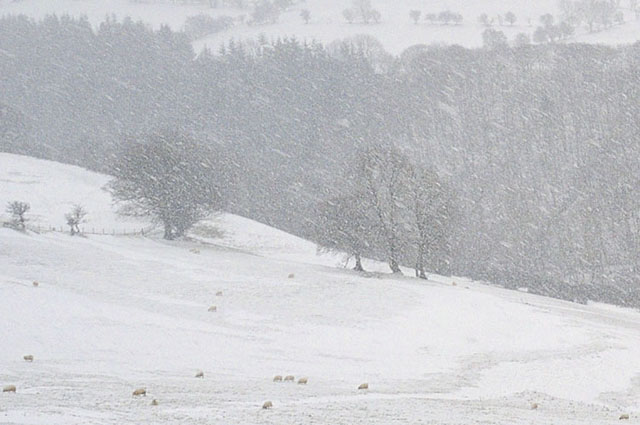
[In route to London, Duncan, Shepherd, Dovey and Foreman take shelter from a hundred-years storm.]

     Floundering through the mass of swirling white engulfing him, Duncan at last groped a low stone wall with the low eaves of a pitched roof just higher than his brow.  He had no idea what he found, but they would take any shelter in that storm. 
     "Wait here!" he shouted to his mates over the howling storm. "I will find the door!"  Deaf and blind with nature's fury, each had stopped after plowing into the horse before him.  Duncan surrendered the reins of his mount to his partner,  communication enough for the four friends.
     They had stumbled upon a small but prosperous dairy, with walls of stone and a flagstone floor, kept with meticulous care. It was not The George at Dover, but it would do. They had slept in far worse, and they would have never survived the fast encroaching night out of doors.
     Within, instead of darkness, a lantern burning low hung from the rafters near the doors. In the center of the space, a large, circular hearth contained a well-tended fire. Duncan turned to his partner, Shepherd. "Find him," he muttered softly.

Tidbits: Fleet Street

Deleted scene from My Father's Son

by Penny Freeman
Holborn, January, 1809


     Accustomed to their drafty garrets and scanty meals, too little coal for their fires, too few hours in their days, the overworked, underpaid, unappreciated solicitor apprentices of ‘the pit’ gallery at Schoonover, Pensinger, Conroe & DuPre knew that despite the terms of their articles being fulfilled, they may spend years more as a ‘fledgling’, as pompous Pensinger delighted in calling them, and thus never questioned their fate.
      Rather, they endured it for, after all, theirs were the oldest, most respected chambers in The Temple.  To represent Schoonover even as a lackey afforded a man a certain measure of respect.  The chamber’s portfolio of patrons was second to none and in such a situation, an alert, attentive apprentice could find his fortunes made.
      Thus, they guarded their places of honor and subjugation, ‘the nest’, as Schoonover dubbed it long before the birth of any there.  Flanked by the long row of windows which lit the room and guarded by an iron rail as solid as the firm, the nest sat situated atop the closet for the chamber’s most closely held documents.  It overlooked the pit, a warehouse of clerks and attorneys perched atop their high stools, row upon row, scratching their lives into oblivion.
      Their own desks too narrow and confined for the books and folios which overburdened them, each allowed far too little space in which to work, the fledgling solicitors performed their own tasks conscientiously.  They toiled ever with an eye for appeasing Stickler, their master, for they knew him impossible to impress.  A brittle old man of failing eyesight and short temper, with ears to compensate for one and exacerbate the other, he possessed not an humane bone in his body.  Taut, sharp, and austere, they knew the ancient yet breathed for he was far too near to brook the expense of dying.

Tidbits: Francesca's Garden

Here's a bit of The Famous Mrs. Darcy that will never make it into print.  Still, it's worthy of a Tidbit.

[Location:  Longbourn garden---a joyous celebration for Jane & Bingley within; time:  evening after Elizabeth accepts Mr. Darcy's proposal; setup:  Elizabeth's pre-Pride & Prejudice history includes—among other things—a physical assault by a spurned suitor from which she was narrowly rescued from a terrible fate by a mysterious stranger, with his best mate hard on his heels.  The incident was the talk of Meryton.]

Francesca's Garden
by Penny Freeman

              Behind the house at Longbourn, behind the carefully groomed lawns and gardens meticulously planted to reflect its tasteful fashion, marshaled into order for inspection by the neighbors, behind a long and tall stone wall and through a little arched door which guarded the breach, tucked neatly out of sight where it could bring no shame to its betters, a small patch of dirt had been given over to the whims of little girls. To mark the distinction, because it was so marked and so distinct, they called it Francesca’s Garden.
              Had any outsider been allowed to frequent that garden (which rarely happened), initiated to the secrets beyond that curious door, if they were familiar with the Hermitage, a quaint little cottage on the grounds of a local abbey, they would suppose that the Bennets copied their more prosperous kin. They would have been mistaken, for it was entirely the opposite. The Mastersons, especially the gardeners of Oakhaven, knew that such as Francesca’s Garden grew from within. Anything else, no matter the grandeur of the scale, was simply a monkey aping the actions of a man.
              Once, when Elizabeth was just a girl and still unafraid of approaching her mother, she asked her why they called it Francesca’s Garden. Her mother’s eyes turned soft and sad. She attacked the soil beneath her spade until she had dug up enough courage, then leaned back on her haunches and looked to her daughter, her eyes shimmering with tears. When Elizabeth considered her mother’s timeless beauty, she thought of that day in the garden as she knelt in the dirt surrounded by a riot of blooms.
              Her mother told her that her father used to call her as much once, her name in a tongue strange and foreign. They had been young, before the hardships and disappointments of his life had ground all the romance out of him. But that was long ago. Before she broke his heart.